Clout Over Care: Mr. Tendernism, Keith Lee, and the Quiet Narcissism Behind Blocking a Blessing
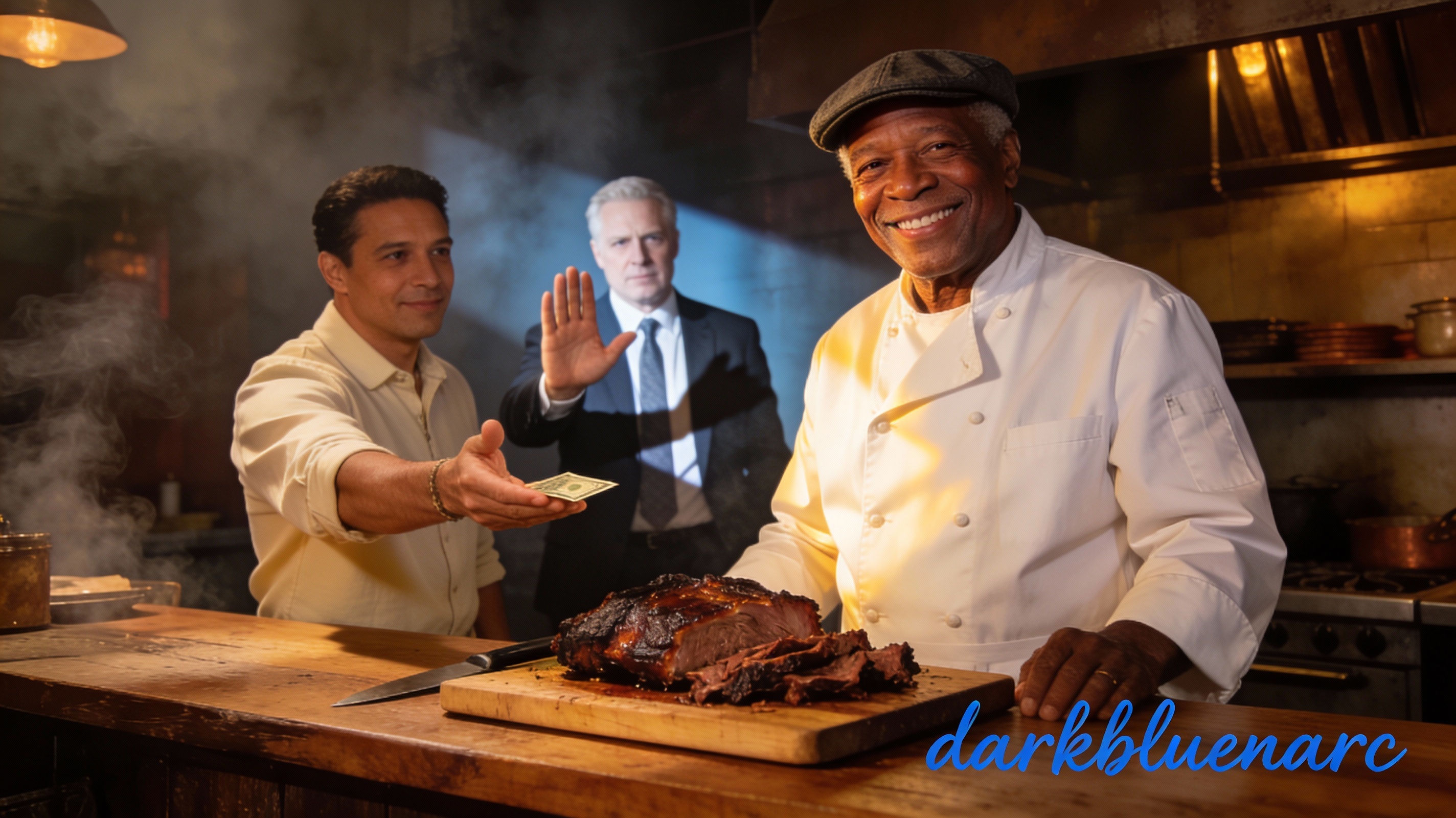
There's a moment in every viral story where you realize something shifted. The energy changed. What felt like a blessing turned into a negotiation. And if you're paying attention, that's when the real story begins.
That's where Mr. Tendernism's moment sits right now.
If you've been online in the last few months, you've probably seen him—the older Black man in the white chef's coat and flat cap, cutting into meat so tender it falls apart at the mere suggestion of a knife. His reactions are real. His joy is genuine. His catchphrase "tendernism" became the sound of TikTok and Instagram, a cultural moment that felt wholesome, earned, and authentically joyful in a space usually cluttered with performance and fakeness.
Then Keith Lee—one of the internet's most beloved food critics—came through Destination Smokehouse in California to review the food. And he wanted to bless Mr. Tendernism with a $5,000 tip. A real, generous, no-strings-attached blessing from one successful content creator to another.
Except it never happened. Security stopped him. The owner redirected the moment. And suddenly, the internet watched a blessing get blocked in real time, and everyone had questions.
This isn't just a story about barbecue or tips or social media drama. This is a story about who gets to own virality, who benefits from it, and what happens when power dynamics hide behind smiles and smokehouse steam.
Who Is Mr. Tendernism? The Rise of "Unc"
Before he became a viral phenomenon, Mr. Tendernism—known as "Unc" or Walter to those who know him—was a pit master doing what pit masters do: cooking meat with skill, care, and decades of experience. He worked at Destination Smokehouse in Murrieta, California, a restaurant owned by an Armenian businessman who recognized early on that Walter's presence and personality had something the restaurant needed: authenticity.
In an economy built on performed relatability and filtered joy, Walter's reactions to perfectly smoked meat felt revolutionary. When he cuts into a rack of ribs and they literally fall apart because they're cooked so well, his face registers genuine wonder. Not the exaggerated surprise of a reaction video—the actual, unscripted delight of a craftsman who knows his work is good and gets to share it. That's rare enough to be magnetic.
The videos started circulating. First on TikTok, then Instagram Reels, then YouTube shorts. His expression became a template. His voice became a sound. His catchphrase—"tendernism"—became something people used in comments, in conversation, as shorthand for that perfect moment when something works exactly as it should.
By late 2025, he wasn't just a pit master anymore. He was a brand. A meme. A cultural reference point. Millions of people knew who "Unc" was without ever visiting the restaurant or eating the food. They just knew the feeling he represented: genuine satisfaction, real craft, and the joy of watching something work perfectly.
That's when things got complicated.
The Viral Moment: How a Catchphrase Became a Brand
Viral moments are interesting because they happen in this weird space between accident and design. Sometimes a person or a moment just *hits* culturally, and everyone's trying to figure out if it was planned or if lightning struck. With Mr. Tendernism, it felt like the latter. The content wasn't overly produced. The reactions weren't calculated. He was just being himself, and the internet responded.
But here's where it gets tricky: once something goes viral, it stops belonging entirely to the person who created it. It becomes a shared cultural asset. People remix it, reference it, build on it. The word "tendernism" itself started getting trademarked by multiple parties—a detail that's been quietly sitting beneath the surface of this whole story, waiting for someone to pay attention.
The restaurant's owner clearly understood what was happening. Social media visibility is currency. A viral pit master working at your smokehouse means foot traffic, engagement, relevance. Destination Smokehouse went from being a local California BBQ spot to being *the place* where you could potentially see "Unc" in action. That's valuable. That's marketing money that you don't have to spend because someone's authentic joy is doing the work for you.
Mr. Tendernism was happy. The videos were fun. The restaurant was getting attention. Everything seemed aligned.
Then Keith Lee showed up, and the alignment suddenly looked a lot different.
Keith Lee's Blessing: $5K Tip and What Happened Next
Keith Lee is one of the internet's most powerful food critics. His reviews move restaurants. His presence matters. When he came to Destination Smokehouse, it wasn't just a review—it was a co-sign from one successful content creator to another. He was there to celebrate Mr. Tendernism's work, to acknowledge the craft and the authenticity that made the viral moment real.
After the meal, Keith Lee decided to do something genuinely generous. He wanted to give Mr. Tendernism a $5,000 tip. Not for the restaurant. For Mr. Tendernism personally. A direct blessing. A recognition that the man's talent and presence had value beyond what the restaurant was probably paying him.
This is where the story pivots.
Security stepped in. The owner appeared. The moment didn't happen. Keith Lee was essentially redirected, and what could have been a viral moment of pure generosity—successful creator blessing another creator—became a complicated question mark instead.
Within hours, the internet was asking: Why would you block a tip? Why would you prevent someone from being generous to an employee? What's actually happening behind the scenes at this restaurant?
The owner later responded with a statement that basically said Keith Lee shouldn't have tried to give the tip directly because it bypasses proper channels or something along those lines. The exact reasoning got lost in the noise, but the implication was clear: control. Maintaining control over the narrative, the money, the relationship between the restaurant and Mr. Tendernism.
That's when people started looking closer at the arrangement.
The Block: When Business Wears a Smile
Here's what made the tip-blocking moment so revealing: it exposed the power structure that had been quietly operating the entire time.
Mr. Tendernism didn't own the restaurant. He didn't own the brand. He didn't even own the word "tendernism"—or at least, that's become unclear as trademark applications surfaced from various parties. What he had was his face, his presence, his reactions, and his labor. And that was being managed.
When Keith Lee tried to give him a direct tip, he was trying to bypass the management structure and acknowledge Mr. Tendernism as an independent operator—someone with individual value who could receive blessings directly. The owner's intervention essentially said: No. There's a system here. There's a chain. Blessings flow through the restaurant, not to him.
That's not unusual for employee-employer relationships. But Mr. Tendernism isn't just an employee. He's the reason millions of people know that restaurant exists. His authenticity is the product. His face is the asset. And somehow, he's in a position where someone else gets to decide whether he receives direct generosity.
The internet noticed. People started asking questions about contracts, about ownership of content, about who actually benefits when virality happens. And those are the right questions.
Ownership Questions: Who Actually Controls "Tendernism"?
When you strip away the warmth and the barbecue and the viral charm, what you're left with is a very simple question: Who owns Mr. Tendernism?
Not as a person—obviously, he owns himself. But as a brand. As a phenomenon. As the source of millions of dollars in restaurant traffic and social media engagement. That's where the ownership question gets murky.
On the surface, it seems clear: Destination Smokehouse owns the restaurant. Mr. Tendernism works there. The restaurant owns his labor during work hours. But viral moments exist in a different economy. They're not contained by the walls of a building or the hours of a shift. They live on phones, in feeds, in the collective memory of the internet. And once they're out there, the question of who benefits becomes more complicated.
The owner of Destination Smokehouse didn't create Mr. Tendernism's authenticity. He didn't teach him how to cook or how to react genuinely to good meat. What he did was recognize the value of that authenticity and create the conditions where it could be filmed and shared. He provided the platform. Mr. Tendernism provided the magic. The result is billions of views and unprecedented restaurant visibility.
But here's where it gets interesting: the owner also gets to decide how that value is distributed. He can decide whether a $5,000 tip from Keith Lee reaches the person who created the viral moment or gets redirected through "proper channels." He can decide if Mr. Tendernism gets a raise based on the increased foot traffic. He can decide if contracts change now that the man is internationally recognized. He has the structural power.
And structure is everything when it comes to ownership. Because Mr. Tendernism can't just leave and take his authenticity with him—at least not without consequences. If he walked away from Destination Smokehouse tomorrow, the restaurant still has years of footage of him. His image is embedded in the brand now. The videos exist. The brand equity he created is locked into the restaurant's identity, whether he's there or not.
That's a form of leverage. That's a form of control. And that's what the Keith Lee tip moment really exposed.
The Trademark Complication: Controlling a Word, Controlling a Narrative
Here's where things get even more complicated: the word "tendernism" itself.
A catchphrase goes viral, becomes part of internet culture, and suddenly multiple parties are filing trademark applications to own it. This isn't new—it happens constantly in viral culture. Someone creates a phrase, it blows up, and then lawyers and business people start asking: Who owns the rights to monetize this?
The problem is that none of those trademark applications were filed by Mr. Tendernism.
Think about that for a second. The man literally created the word through his authentic reactions. He's the source of it. His voice, his expression, his energy is what made "tendernism" meaningful. And yet, he apparently doesn't own it. Other entities do—or are trying to.
This is a pattern that happens over and over in internet culture, especially when race and economics intersect. A person of color creates something authentic and culturally significant. Other people—often people with more structural power, more legal resources, more business infrastructure—step in and claim ownership of the intellectual property. The original creator gets visibility and maybe some attention, but the long-term ownership and monetization potential goes elsewhere.
It's not necessarily malicious. It's just how systems work when one person has all the power and the other person has the authenticity but no institutional backing.
If someone wants to make a "tendernism" energy drink or "tendernism" barbecue sauce or anything else, who gets to decide? Who gets paid? Mr. Tendernism created it, but does he own it? Based on how the trademark situation looks, probably not.
That's control operating on a different level. Not just controlling whether he gets a direct tip from Keith Lee, but controlling whether he can monetize the very thing he created.
Mr. Tendernism Responds: What He Said and What That Reveals
After the Keith Lee tip drama exploded online, Mr. Tendernism did eventually speak up. He made a video addressing the situation, trying to calm the flames, trying to put things in perspective.
The internet's interpretation: "He got told what to say."
Whether that's literally true or not is hard to know from the outside. What we do know is that his response felt constrained. It felt like someone managing a narrative rather than someone expressing genuine frustration or joy. He was addressing damage control, not celebrating what happened.
And that's significant. Because it suggests a dynamic where he doesn't have full freedom to respond authentically to what happened. There are considerations beyond just his own feelings. There's a business relationship. There's employment. There's the reality that he can't just say whatever he wants without consequences.
Compare that to Keith Lee's response. Keith Lee is an independent content creator with his own massive platform. When he decided to give the tip, he didn't need permission from anyone. He didn't have to check with an employer or worry about getting in trouble. He could just do the generous thing and then talk about it publicly exactly how he felt about it.
Mr. Tendernism doesn't have that freedom. Every word he says exists within the context of his employment, his relationship with the restaurant, his dependence on that platform to maintain his visibility. He's not free in the way that Keith Lee is free.
That's what the muted response actually revealed. It revealed that control is working exactly as it's designed to work. The narrative gets managed. The person at the center gets to say enough to ease the pressure, but not enough to speak truth. The system maintains itself.
Clout as Power: How Viral Moments Get Managed and Protected
In internet culture, clout is currency. And like all currency, it can be hoarded, managed, and protected by people who understand its value.
The restaurant owner understood from the beginning that Mr. Tendernism's presence and authenticity were worth money. That's smart business. But understanding the value and managing it aggressively are two different things. The tip-blocking moment wasn't just about one generous gesture—it was about maintaining control over how clout flows through the system.
If Keith Lee gives $5,000 directly to Mr. Tendernism, what's the message? The message is that Mr. Tendernism has individual value that can be recognized and rewarded outside of the restaurant structure. The message is that his authenticity is portable. The message is that he's not just an employee—he's a brand unto himself.
An owner who's invested in maintaining control can't let that message spread. Because the moment Mr. Tendernism realizes his own independent value, the negotiating power shifts. He might want a raise. He might want different terms. He might consider opportunities elsewhere. He might realize he doesn't actually need the restaurant as much as the restaurant needs him.
So instead, you manage the moment. You block the tip. You maintain the structure. You send a clear signal: Your value flows through me, not directly to you. You can't accept blessings from outside the system. You can't monetize your own authenticity without my permission.
It's a form of control that looks reasonable on the surface. It's business. It's proper channels. But underneath, it's about maintaining power.
The Owner's Position: Credit, Control, and Image Management
Let's be fair to the restaurant owner for a moment, because understanding the other side of a power dynamic is important.
He took a risk. He gave Mr. Tendernism a platform. He allowed the filming. He didn't shut down the social media attention or try to keep things private. He could have done that. Many restaurant owners would have. Instead, he let the videos happen, let the audience grow, and let his business benefit from the viral moment. That's not nothing.
From his perspective, he might genuinely believe he's protecting a professional arrangement. Maybe in his mind, direct tips from celebrities undermine the restaurant's brand positioning. Maybe he thinks there's a proper way to handle employee recognition that doesn't involve random celebrities handing out money. Maybe he sees himself as a protector of structure and professionalism.
But here's the thing: none of that changes what actually happened. Regardless of his intentions or reasoning, the effect was to block a gesture of generosity toward someone who created value that directly benefits the business.
And when you block that gesture publicly, in front of millions of people who are watching, you send a message. The message isn't "we have proper channels." The message is "this man doesn't control his own image or his own value. I do."
The owner's response to the backlash was interesting too. He positioned it as Mr. Tendernism not deserving all the credit, that the food and the restaurant contribute to the appeal. Which is technically true. Good barbecue and an authentic pit master work together. But that statement also minimizes the one thing that Mr. Tendernism actually controls: his presence, his reactions, his labor.
The food doesn't get credit. The owner doesn't get credit in the viral videos. Mr. Tendernism does. Because he's the one on camera. He's the one making the content. He's the one whose authenticity is the product being sold.
So when the owner steps in to say that credit needs to be shared more broadly, what he's really doing is diluting Mr. Tendernism's individual ownership of what he created. He's repositioning it as a collaborative effort where his role as restaurant owner becomes more central and visible.
That's image management. That's control of narrative. And it's worth noticing.
When Gratitude Gets Complicated: Why Some Blessings Create Tension
Here's something worth thinking about: why does a blessing create tension in the first place?
If Mr. Tendernism was truly just an employee being appreciated by a customer, a tip would be normal. Expected, even. The fact that this tip created a situation tense enough to block it suggests that the relationship isn't actually structured as a normal employee-customer dynamic.
It's more like: famous creator recognizes another creator's work and wants to acknowledge it directly. That's different from a customer tipping a server. That's peer-to-peer recognition. That's one person with independent platform power acknowledging another person's independent value.
And that's threatening to a structure built on the idea that Mr. Tendernism's value flows through the restaurant.
Gratitude, when it's genuine and direct, can be destabilizing to power structures. Because it acknowledges value in ways that bypass the official hierarchy. It says: I see you. I recognize what you're doing. And I'm choosing to acknowledge it directly, not through your employer, not through proper channels, but to you.
That kind of direct acknowledgment is powerful. It can make someone realize they're more valued than their current situation reflects. It can inspire them to seek better terms or different opportunities. It can shift the power balance in a negotiation.
Which is probably exactly why it got blocked.
Keith Lee wasn't just being generous. He was, intentionally or not, affirming Mr. Tendernism's independent value. And once that's affirmed publicly, once millions of people see it, once it becomes part of the narrative, it's harder to maintain the fiction that Mr. Tendernism needs the restaurant more than the restaurant needs him.
Patterns of Power: What This Situation Exposes About Viral Economies
The Mr. Tendernism situation isn't unique. It's a pattern that repeats constantly in viral culture, especially at the intersection of authenticity, labor, and who gets to profit.
Think about influencers who built massive followings on platforms they don't own. TikTok creators who generate billions of views but have no ownership stake in the algorithm that distributes their content. YouTube creators who built empires on channels they could lose tomorrow if the platform changes its policies.
The platform owners have structure, legal rights, terms of service. The creators have authenticity, audience loyalty, and the ability to generate engagement. But when conflict arises, the creator's leverage is way more fragile than it appears.
The same dynamic plays out with Mr. Tendernism. He has authenticity. He has audience connection. He has the ability to generate value. But the restaurant owner has structure, contract terms, physical location, and institutional power. When it comes time to negotiate who benefits from the viral moment, guess who has more leverage?
This pattern repeats especially with Black creators and creators of color more broadly. The authenticity is valued, praised, and celebrated. The cultural work is commodified. But the ownership and long-term benefit often flows to people with more institutional power and legal resources.
It's not always intentional. It's often just how systems work when they're built without centering the actual creator's interests. But the effect is the same: authenticity gets extracted and value gets redirected to people who know how to protect and profit from it through legal and business structures.
Mr. Tendernism isn't alone. He's part of a much larger story about whose labor gets valued and whose labor gets extracted.
What Mr. Tendernism's Story Says About Us
The most interesting part of the Mr. Tendernism moment isn't what it says about him or the restaurant owner. It's what it says about how we respond to viral culture.
Millions of people watched a blessing get blocked. And millions of people had an immediate, visceral reaction to it. Because on some level, we all recognize what was happening. We recognized the power play. We recognized the control. We recognized that what looked like a simple business decision was actually about maintaining a hierarchy.
That reaction matters. It says that despite being immersed in a culture built on exploitation of authenticity, we still have an intuition for when it's happening. We still notice. We still care.
But here's what's also true: that reaction didn't actually change anything. The tip still didn't reach Mr. Tendernism. The structure still maintained itself. The story got processed as internet drama and moved on to the next outrage.
Which suggests that our recognition of power dynamics isn't always enough to interrupt them. Visibility doesn't automatically create change. Sometimes seeing the problem and doing something about it are two very different things.
So what does it mean? It means we need to think harder about what we're celebrating when we celebrate viral creators. Are we celebrating their authenticity, or are we celebrating their vulnerability? Are we supporting their independence, or are we consuming their labor? Are we asking who benefits from their virality, or are we just enjoying the content?
Mr. Tendernism's story is a mirror. It reflects back what viral culture actually is when you look past the entertainment: a system for extracting value from authenticity, packaging it as content, and distributing the benefits unequally based on who has structural power.
That doesn't make the content bad. That doesn't make his reactions less genuine or less worth watching. It just means we should probably be more conscious about what we're participating in when we engage with it.
The Real Lesson: Clout Over Care
At the end of this whole story is a simple truth: the restaurant owner chose control over generosity. He chose to maintain the power structure over allowing direct recognition of Mr. Tendernism's value.
That's the core of what happened. Not the specific details about tips or security or proper channels. Those are just the mechanisms. The real story is about what happens when someone has power and someone else has authenticity, and how those two things play out in a system built to concentrate benefit at the top.
Keith Lee saw Mr. Tendernism and wanted to recognize him directly. That recognition would have changed the dynamic slightly. It would have affirmed his independent value. It would have suggested he has leverage he might not have realized he had.
So it got blocked. Kindly, maybe. Professionally, definitely. But blocked nonetheless.
And that's what clout over care actually looks like in practice. Not cruelty. Not drama. Just the quiet, persistent prioritization of control and structure over the simple human gesture of recognition and gratitude.
Mr. Tendernism will keep cooking. The restaurant will keep benefiting from his presence. People will keep watching the videos and feeling that genuine joy that comes from watching someone do something really well. And somewhere underneath all of it, the question of who actually benefits will keep being quietly managed, quietly controlled, and quietly redirected away from the person who made it all possible.
That's the real tendernism—not the meat, but the moment. When something beautiful gets created and then gets managed by people with more power than the person who made it.
Connect with Darkbluenarc
Follow for more pop psychology breakdowns, narcissism analysis, and social commentary on viral culture and power dynamics.
📌 Pinterest @Darkbluenarc
👤 Facebook @Dark Blue Narc
📸 Instagram @darkbluenarc
𝕏 X (Twitter) @darkbluenarc
Disclaimer
Informational Content: This post is for entertainment and educational purposes only. It discusses public events and cultural analysis and does not constitute professional advice of any kind.
Mental Health: If you're experiencing issues related to workplace dynamics, control, or toxic relationships, consider speaking with a licensed mental health professional or counselor.
Not Professional Advice: Nothing in this post should be taken as legal, financial, business, or psychological diagnosis. Always consult appropriate professionals for guidance specific to your situation.
Opinions & Analysis: This content reflects analysis and commentary on publicly available information and viral culture. Individual perspectives may vary.
References
1. Dexerto — "Chef Mr Tendernism responds after Keith Lee stopped from giving $5K tip" (January 12, 2026)
https://www.dexerto.com/tiktok/chef-mr-tendernism-responds-after-keith-lee-stopped-from-giving-5k-tip-3303581/
2. Black Enterprise — "The $4K Fumble: 'Mr. Tendernism' Missed A Blessing From Keith Lee" (January 1, 2026)
https://www.blackenterprise.com/mr-tenderism-missed-4k-tip-keith-lee/
3. Atlanta Black Star — "'He Got Told What to Say': Mr. Tendernism Slams Hate Over Keith Lee Tip in New Video" (January 13, 2026)
https://atlantablackstar.com/2026/01/14/mr-tendernism-slams-hate-over-keith-lee-tip-in-new-video/
4. Blavity — "Keith Lee Had A $4K Tip For Viral Chef Mr. Tendernism, But..." (January 2, 2026)
https://blavity.com/keith-lee-4k-tip-left-for-mr-tendernism-missed
5. Tapped in Culture (Substack) — "6'7 Made the Dictionary & Unc's Tenderism" (November 1, 2025)
https://tappedinculture.substack.com/p/67-made-the-dictionary-and-uncs-tenderism
6. Forbes — "'Tenderism' Took Over TikTok In 2025 — Here's What Comes Next In 2026" (January 3, 2026)
https://www.forbes.com/sites/dougmelville/2026/01/04/tenderism-took-over-tiktok-in-2025---heres-what-comes-next-in-2026/
7. Instagram — Reel by Thalia Calloway — "Do Yall Believe Mr.Tendernism Is Being Ripped Off?!" (January 15, 2026)
https://www.instagram.com/reel/DThE04qgMxq/
8. YouTube — "The Keith Lee & Mr. Tenderism Drama Just Got Worse" (January 15, 2026)
https://www.youtube.com/watch?v=tqGd4uKvTHM
9. YouTube — "Keith Lee Tries to Bless 'Tendernism' Unc… Owner's Response..." (January 9, 2026)
https://www.youtube.com/watch?v=f1piLClPh-c
10. YouTube — "GREEDY BBQ Owner EXPOSED for STEALING Mr. Tendernism's..." (January 14, 2026)
https://www.youtube.com/watch?v=CUIh9Wlt9n8


Comments
Post a Comment